
home > services > pat testing
FIRE RISK ASSESSMENTS
20 + YEARS
COMMERCIAL
MULTI-SITE
Fire Risk Assessments for Businesses & Commercial Premises
A Fire Risk Assessment identifies fire hazards within a premises, determines who may be at risk and assesses whether existing fire precautions are suitable. City PAT provides professional fire risk assessments to help businesses, landlords and organisations understand their fire risks and the actions required to improve fire safety.
What is a Fire Risk Assessment?
A fire risk assessment is a systematic assessment of:
- potential sources of ignition
- combustible materials and fuel sources
- people who could be at risk
- means of escape
- fire detection and alarm systems
- emergency lighting
- firefighting equipment
- fire doors and compartmentation where relevant
- fire-safety management arrangements
- staff information and training
- emergency procedures
The objective is not simply to produce a document.
It is to identify fire hazards, reduce risks where reasonably practicable and determine what precautions are needed to protect people if a fire occurs.
Official fire service guidance describes the core aims as identifying hazards, reducing fire risk and determining the active, passive and management precautions necessary to protect people.
Is a Fire Risk Assessment a Legal Requirement?
For most non-domestic premises in England and Wales, yes.
Under the Regulatory Reform (Fire Safety) Order 2005, the Responsible Person must ensure that a suitable and sufficient fire risk assessment is carried out and kept under review.
From October 2023, changes made through the Building Safety Act strengthened record-keeping duties for Responsible Persons in England.
Different legislation applies in other parts of the UK, so the requirements should always be considered according to the location and type of premises.
Who is the Responsible Person?
Depending on the circumstances, a Responsible Person can include:
- an employer
- business owner
- landlord
- building owner
- occupier
- property manager
- managing agent
- another person with control over the premises
There can also be more than one Responsible Person for a building, in which case cooperation and coordination may be necessary.
How Often Should a Fire Risk Assessment Be Reviewed?
A fire risk assessment should remain current.
It should be reviewed when there is reason to believe it is no longer valid or when significant changes occur.
Examples include:
- alterations to the building
- changes in occupancy
- changes to business activities
- new equipment or processes
- increased storage of combustible material
- changes affecting escape routes
- a fire or significant near miss
- findings from inspections or enforcement activity
Fire service guidance specifically advises review following meaningful changes in risk or where the existing assessment may no longer be valid.
What Happens After the Assessment?
A useful Fire Risk Assessment should give you a practical understanding of:
what the risks are
what existing precautions are adequate
what needs improvement
what should be prioritised
The assessment should then form part of an ongoing fire-safety management process rather than being filed away and forgotten.
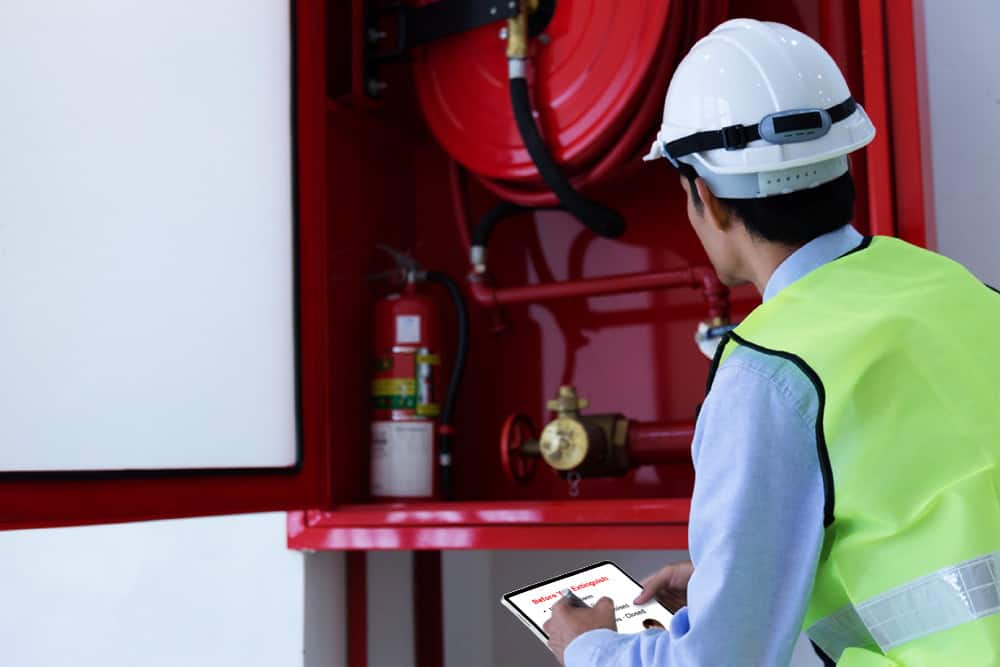
Who Needs a Fire Risk Assessment?
Fire risk assessments are relevant to a wide range of premises including:
- offices
- shops
- schools
- hotels and guest accommodation
- restaurants
- warehouses
- factories
- healthcare premises
- communal areas of some residential buildings
- construction sites
- public buildings
- charities and voluntary organisations
What Does a Fire Risk Assessment Look At?
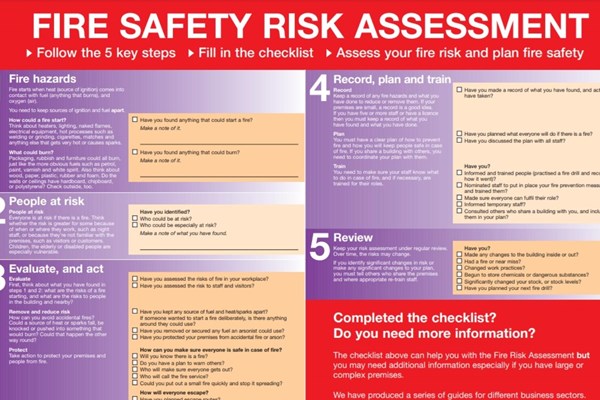
1. Fire hazards
Potential sources of ignition, combustible materials and other factors that could contribute to a fire.
2. People at risk
Employees, visitors, contractors, members of the public and anyone who may need additional assistance during an emergency.
3. Existing fire precautions
The assessment considers measures already in place to prevent fire and protect people.
4. Escape arrangements
Routes, exits, signage, emergency lighting and factors that could affect safe evacuation.
5. Fire detection and warning
Whether the existing fire alarm and detection arrangements are appropriate for the premises.
6. Firefighting equipment
The availability and suitability of extinguishers or other firefighting provisions where required.
7. Management arrangements
Fire procedures, training, records, responsibilities and ongoing maintenance arrangement
Fire Risk Assessment FAQs
The Responsible Person may carry out an assessment where they have sufficient competence to do so. Where the premises or risks are more complex, appointing a competent specialist may be appropriate.
The Fire Safety Order applies broadly to non-domestic premises in England and Wales, not only to large businesses.
No. A fire alarm test examines a particular fire-safety system. A fire risk assessment considers the wider risks, people and precautions across the premises.
Current requirements in England place strengthened duties on Responsible Persons to record fire risk assessment findings and fire-safety arrangements.
The findings should be used to prioritise appropriate corrective actions and improvements.
Arrange a Fire Risk Assessment
If you’re responsible for a workplace, commercial premises, rental building or multi-site organisation, City PAT can help you understand and manage your fire-safety risks.
Contact us today for a free quotation.