
Expect to pay roughly £100 to £300 for a domestic EICR, with most reports landing around £200. Commercial properties cost more, priced per circuit rather than as a flat fee. Landlords in England must have a valid EICR carried out at least every five years under the Electrical Safety Standards in the Private Rented Sector Regulations 2020, or whenever a new tenancy starts if the last certificate is due to expire.
TL;DR:
- The cost of an EICR for a one-bedroom flat typically ranges from £100 to £150, while larger properties or HMOs can cost up to £500 or more depending on circuit complexity and property size.
- The main factor influencing the quote is the number of circuits tested, with older wiring, access issues, and outdated consumer units significantly increasing the time and cost.
- Remedial work costs vary from tens of pounds for minor fixes to thousands for rewiring, with full domestic rewires at £3,000 to £5,000 depending on property size and complexity.
- Landlords in England must have an EICR every five years, and the quote should explicitly include or exclude reinspection and remedial work to avoid unexpected charges.
Table of Contents
- What does an EICR cost by property size?
- What actually changes your EICR quote?
- How much do EICR remedial works usually cost?
- Who can carry out an EICR and what’s the legal requirement?
- How do I get an accurate EICR quote?
- What does a professional EICR appointment actually involve?
- Why the cheapest quote is rarely the smartest one
- Get a free, itemised EICR quote from Citypat
- Sources
- FAQ
What does an EICR cost by property size?
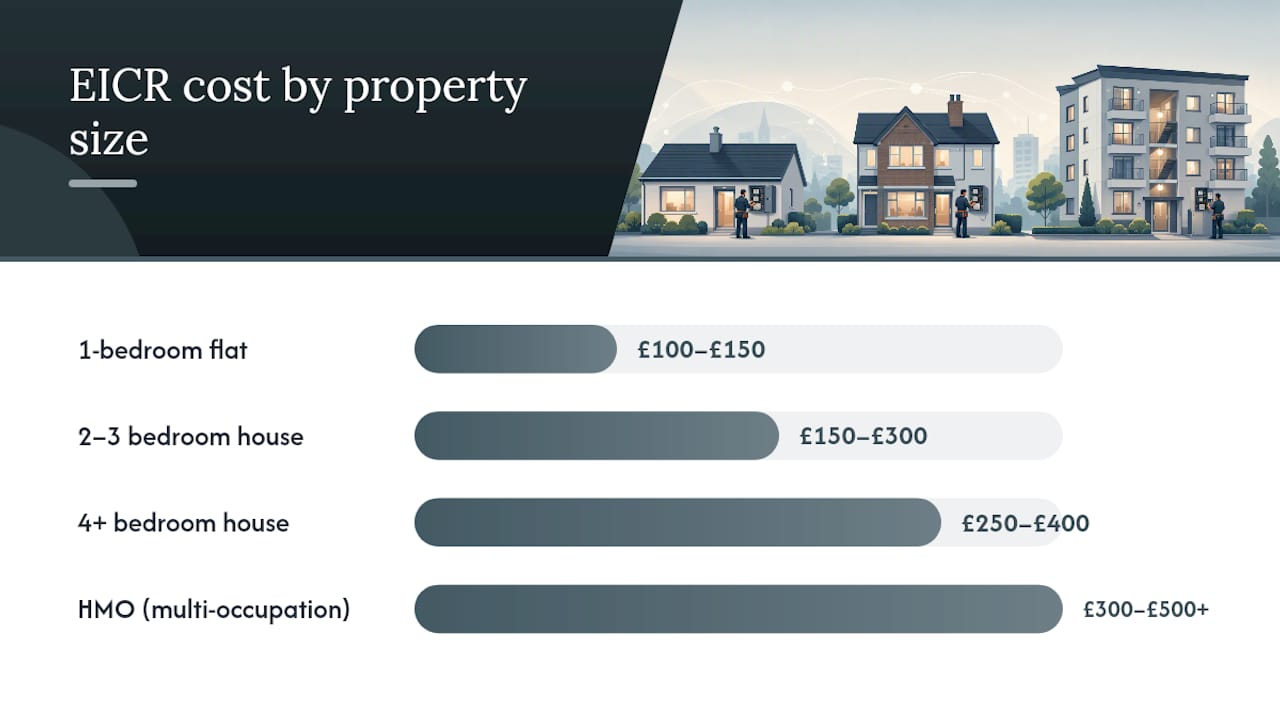
The single biggest factor in your quote is how many circuits an engineer has to test, and that scales closely with property size. A one-bedroom flat with a modern consumer unit takes far less time than a five-bedroom HMO with three kitchens and a tangle of extensions bolted on over forty years.
Here’s roughly what you should expect to pay across common property types in England:
- 1-bedroom flat: £100 to £150, often at the lower end if wiring is recent
- 2 to 3-bedroom house: £150 to £300, the most common band for typical rental stock
- 4+ bedroom house: £250 to £400, reflecting extra circuits and often loft or outbuilding wiring
- HMO (house in multiple occupation): £300 to £500+, because of multiple kitchens, fire alarm interlinks and higher circuit counts
- Small commercial unit: priced per circuit, typically £30 to £50 each
Statistic Callout: Industry pricing guides put the UK average domestic EICR at around £200, with platform data from MyBuilder placing typical fees closer to the £150 to £250 range and flagging a premium for London and the South East, where labour rates and travel time push quotes up by 10 to 20% compared with the rest of the country.
Commercial EICRs work differently. Rather than a flat fee, engineers usually price per circuit because a small office might have 15 circuits while a warehouse unit has 60 or more. A typical small retail unit with 20 to 30 circuits could see a bill of Costs can be several hundred to over a thousand pounds depending on the number of circuits, before remedial work. Larger commercial sites with distribution boards feeding multiple floors will run considerably higher, and it’s worth asking for a site survey before accepting a quote sight unseen.
If your property sits outside these bands, don’t assume something is wrong. Age of the installation, number of outbuildings, and whether there’s a swimming pool, hot tub, or EV charger on a dedicated circuit will all nudge the price in either direction.
What actually changes your EICR quote?
Two properties of identical size can generate very different quotes, and it usually comes down to a handful of concrete factors rather than the engineer simply charging what they fancy.
- Number of circuits: this is the main driver. A circuit is any single wiring loop, lighting ring, socket ring, or dedicated feed, from a cooker circuit to an outdoor shed supply, and every one has to be tested and recorded individually.
- Age and condition of the wiring: older rubber or fabric-insulated cabling takes longer to assess safely and often triggers more observations, which extends time on site.
- Consumer unit type: a modern metal-clad unit with RCBOs tests quickly; an old fuse box with rewireable fuses and no RCD protection adds time and near-certain remedial recommendations.
- Access: cluttered lofts, boxed-in meter cupboards, or tenants who can’t provide access to every room all add time, and some engineers charge a call-back fee if they can’t complete the job in one visit.
- Engineer rates and timing: day rates for qualified electricians typically run £250 to £500, and evening or weekend appointments often carry a surcharge of 10 to 20%.
- What’s included: some quotes cover the inspection only; others bundle a follow-up reinspection or a fixed number of minor remedial fixes into the price.
Pro Tip: Always ask whether the quoted price includes a written, itemised list of any Code 1, Code 2, or Code 3 observations. A quote that’s silent on this usually means you’ll get a verbal summary and a separate, unplanned bill for the paperwork later.
How much do EICR remedial works usually cost?
An EICR result is rarely a flat pass or fail. Most reports flag at least one observation, and the report fee covers only the inspection itself. Any remedial work identified gets quoted and invoiced separately, sometimes by the same engineer, sometimes by a different contractor if you shop around.
Costs vary enormously depending on what’s found:
- Minor fixes (loose sockets, damaged switch plates, missing covers): Minor fixes usually cost tens of pounds per item, sometimes bundled together
- RCD additions or earthing and bonding improvements: £200 to £400, common in older properties without modern protective devices
- Consumer unit replacement: £500 to £800, one of the most frequent Code 2 recommendations on pre-2000s properties
- Partial rewiring: £300 to £600 per circuit, depending on accessibility and whether walls need chasing
- Full domestic rewire: £3,000 to £5,000 for a typical three-bedroom house, and considerably more for larger or period properties with solid walls
A landlord with a genuinely old installation can end up spending more on remedials than on the EICR itself. Ask upfront whether the same firm can carry out repairs and whether that requires a second site visit, because two separate call-outs often means two separate call-out charges.
Who can carry out an EICR and what’s the legal requirement?
Not every electrician is automatically qualified to issue an EICR. The person signing off the report needs to be a “competent person”, which in practice means they hold recognised qualifications in inspection and testing (typically to BS 7671 standard) and carry relevant indemnity insurance. Membership of a body like NICEIC or NAPIT is the quickest way to check this, though membership of a chartered body such as RICS can also signal professional competence in a broader property context.
For landlords in England, the legal timetable is fixed rather than optional:
- An EICR must be carried out at least every five years, or sooner if a previous report specifies a shorter interval
- A copy must be given to existing tenants within 28 days, and to new tenants before they move in
- Local authorities can issue significant penalties for non-compliance, and remedial notices carry strict deadlines
Statistic Callout: The five-year rule applies specifically to landlords under the Electrical Safety Standards in the Private Rented Sector Regulations 2020. It doesn’t apply in the same way to owner-occupiers, though most conveyancing solicitors will expect to see a recent, satisfactory EICR before a sale completes.
It’s worth being clear on what the certificate does and doesn’t do. An EICR assesses the fixed wiring, sockets, and consumer unit against current safety standards. It does not test portable appliances (that’s a separate PAT check), and it does not guarantee an installation will remain safe indefinitely, only that it met the standard on the day of inspection.
How do I get an accurate EICR quote?
Getting comparable quotes means giving every engineer the same information upfront, otherwise you’re comparing guesses rather than prices.
- Brief every contractor identically: state the property type, approximate number of circuits (or age of the consumer unit if you don’t know), whether tenants are in situ, and confirm access to lofts, cupboards, and outbuildings.
- Ask what’s included and excluded: does the fee cover the report only, or does it include a follow-up visit if remedial work is needed? Is reinspection charged separately?
- Check the pricing model: some firms quote a flat fee by property size, others use a base call-out plus a per-circuit rate. The base-plus-per-circuit model tends to suit larger or unusual properties better, since a flat fee can undercharge for complexity.
- Request an itemised breakdown: a written quote listing labour, report fee, and any assumed circuit count protects you from surprise add-ons on the day.
Pro Tip: Clear access before the engineer arrives. Moving furniture away from sockets and unlocking meter cupboards in advance can shave a genuine hour off a job on a cluttered property, and that hour often shows up as a line item on your bill.
What does a professional EICR appointment actually involve?
Citypat (City Appliance Testing Ltd) operates across the UK, including Greater Manchester and Cheshire, carrying out EICR and fixed wire testing alongside PAT testing and fire safety compliance work for landlords, property managers, and businesses.
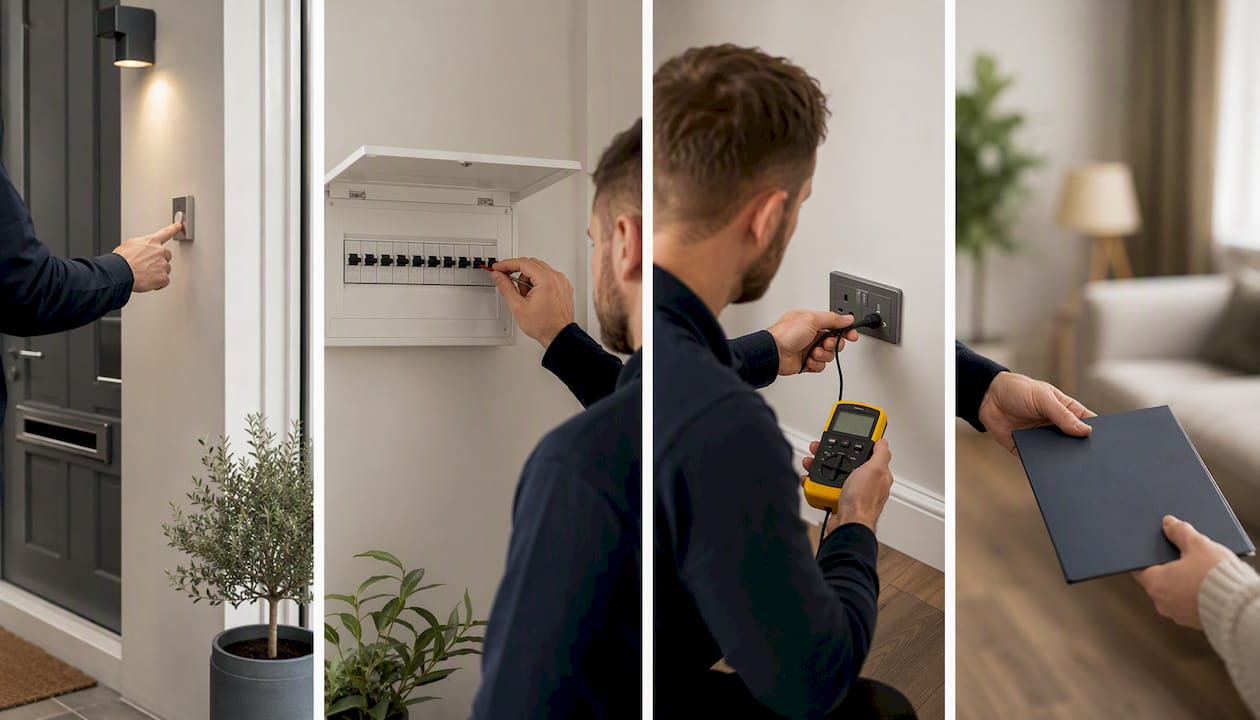
A properly run appointment tends to follow the same shape regardless of who carries it out:
- A full visual and instrument-based inspection of the consumer unit, circuits, and accessible wiring
- Condition coding of any observations found (Code 1 for danger present, Code 2 for potentially dangerous, Code 3 for improvement recommended)
- An itemised estimate for any remedial work, quoted separately from the inspection fee
- A written report, usually turned around within a few working days of the site visit
Landlords who ask for the condition codes to be explained in plain English, not just quoted as “C1/C2/C3” on a form, tend to get far more useful reports. A competent engineer should be able to talk you through exactly why each observation matters and what it will cost to fix.
Why the cheapest quote is rarely the smartest one
The lowest EICR quote often skips detail: fewer circuits actually tested, vaguer condition coding, or no written remedial breakdown at all. That saves you £30 today and risks a failed insurance claim or a local authority penalty later, because a substandard report gives you no real protection if something goes wrong.
Paying slightly more for a thorough, well-documented inspection isn’t extravagance. It’s the cheapest way to avoid a £30,000 fine or a voided insurance policy down the line.
— Gemma
Get a free, itemised EICR quote from Citypat
Citypat gives landlords something most quotes don’t: an itemised breakdown before you commit, so you’re comparing what’s actually included, not just a headline number. Rather than a flat “EICR from £X” figure that hides exclusions, Citypat’s EICR and fixed wire testing service sets out circuit counts, condition coding, and remedial pricing separately, so you know exactly what you’re paying for and what might come next.

If you’re comparing quotes from different engineers, don’t just line up the totals. Check whether reinspection is included, whether the report covers every circuit or a sample, and how quickly you’ll get the paperwork. Landlords managing multiple properties can also combine an EICR booking with PAT testing in the same visit, cutting down on repeat call-outs. To see where you stand, request a free, itemised quote and compare it properly against whatever else lands in your inbox.
Sources
- Electrical safety check costs: Price breakdown 2026 (UK) | Checkatrade
- EICR Cost UK 2026: £100–£300 (Prices by Property Size) | Total Skills
- Gov
- Electrical safety check cost | Price guide | MyBuilder
FAQ
Can a landlord be fined for not having an EICR?
Yes. Local authorities in England can issue civil penalties of up to £30,000 for landlords who fail to comply with the Electrical Safety Standards in the Private Rented Sector Regulations 2020, including missing the five-year inspection deadline.
Can any electrician carry out an EICR?
No. The engineer must be a competent person qualified in inspection and testing, typically evidenced by membership of a body such as NICEIC or NAPIT, rather than general electrical experience alone.
Can I sell my house without an electrical safety certificate?
There’s no legal requirement for owner-occupiers to hold an EICR when selling, but most solicitors and buyers now expect to see a recent, satisfactory report, and its absence can slow down or complicate a sale.
Is an EICR valid for three years or five years?
For landlords in England, the legal requirement is five years, or sooner if the previous report specifies a shorter interval. Some commercial or higher-risk properties may be recommended for testing every three years, but the standard rental property rule is five.
Does the EICR fee include fixing any problems found?
No. The inspection fee covers the report only. Any remedial work, from minor socket repairs to a full rewire, is quoted and invoiced separately once the engineer knows what needs fixing.