
Fire extinguishers need a visual check every month by whoever is responsible for the premises, a full service every year by a competent, accredited engineer, and extended or internal examinations at intervals depending on the extinguisher type. Any extinguisher that gets used, even briefly, needs recharging or replacing before it goes back into service. Miss the annual service and you’re not just risking a faulty extinguisher, you’re breaking the maintenance timetable set out in BS 5306-3.
TL;DR:
- Monthly visual checks must be performed every 30 days by someone responsible for the premises, focusing on placement, seal integrity, pressure gauge, and visible damage.
- The annual service must be carried out by a qualified, BAFE-accredited engineer, who examines the extinguisher’s contents, controls, hose, and valve, with records kept for legal compliance.
- Extended or internal examinations are necessary every five years for most extinguishers, involving internal inspection, discharge, and pressure testing, with hydrostatic tests every 10 to 12 years depending on type.
- If an extinguisher discharges even briefly, it must be recharged or replaced immediately, regardless of the remaining time before the scheduled annual service.
- Businesses should verify their service provider’s competence with accreditation and insist on inspection records, as these documents are critical evidence during inspections or incidents.
Table of Contents
- Fire extinguisher servicing frequency: the practical schedule
- Who is legally responsible, and what records do you need?
- What actually happens during each type of check
- How do you choose a competent fire extinguisher servicer?
- What CityPat sees most often, and why the schedule matters
- Book accredited fire extinguisher servicing with Citypat
- Sources
- FAQ
Fire extinguisher servicing frequency: the practical schedule
Three separate clocks run at once, and mixing them up is the most common compliance mistake landlords make. Monthly checks, annual servicing, and long-interval testing each have a different purpose, and each is non-negotiable for a different reason.
The monthly visual inspection is the one most businesses skip, largely because nobody’s told them it’s required. BS 5306-3’s Clause 11.2 says checks must happen at intervals not exceeding 30 days, and it doesn’t need a qualified engineer, just someone paying attention. That someone is checking for:
- The extinguisher is in its designated spot and hasn’t been moved or removed
- Access to it isn’t blocked by stock, furniture, or a parked delivery trolley
- The tamper seal and pin are intact
- The pressure gauge needle sits in the green zone
- No visible dents, corrosion, or signs of leakage around the base or valve
- Signage pointing to the extinguisher is still visible and undamaged
The annual basic service is where competence actually matters. A qualified engineer examines the extinguishing agent, tests the discharge mechanism, checks the hose and nozzle for blockages, and confirms the valve operates correctly. The Fire Protection Association is blunt about this: it has to be a competent, accredited person doing the work, not whoever’s cheapest.
Beyond the annual visit sit the longer cycles, and this is where extinguisher type starts to matter. Water and foam extinguishers typically need an extended service after several years and a full discharge test at a longer interval. CO2 extinguishers, being pressurised cylinders, undergo hydrostatic testing roughly every decade, sometimes with an internal examination cycle around 12 years depending on the manufacturer’s specification. Powder extinguishers usually follow a similar pattern of extended and longer hydrostatic testing intervals. If an extinguisher discharges for any reason, even a false alarm or a curious employee testing the trigger, it needs recharging or swapping out immediately. It cannot wait for the next scheduled visit.
Who is legally responsible, and what records do you need?
Under English fire safety law, the “responsible person” for a building carries the duty to arrange these checks and keep evidence they happened. That’s usually the employer, the landlord, or whoever manages the premises day to day, and the duty doesn’t transfer just because a tenant occupies the space.
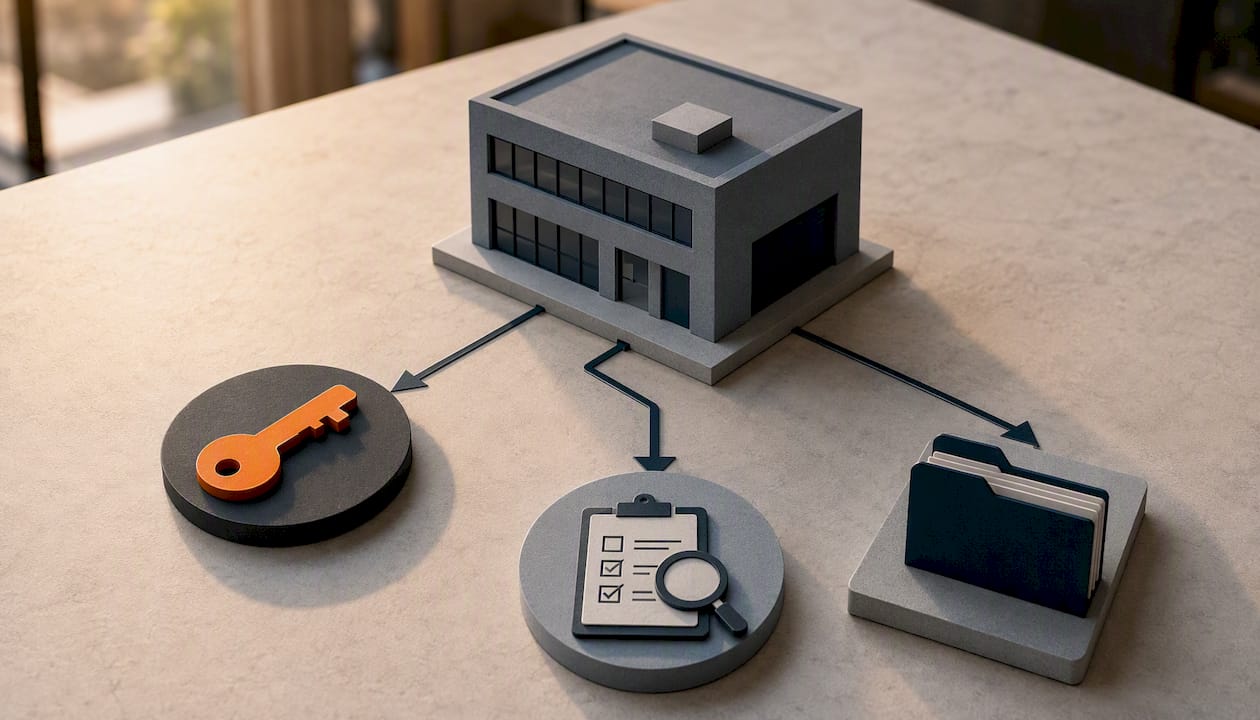
BS 5306-3 sets the maintenance timetable itself, but it’s the FPA and BAFE that push hardest on who should be doing the servicing. BAFE accreditation means an engineer has demonstrated competence against a recognised scheme, rather than just turning up with a van and a toolkit.
Documentation is where a lot of businesses come unstuck after an incident. What you should be keeping:
- The service tag attached to each extinguisher, showing the date and engineer details
- A written service report or certificate for every annual visit
- Records of any extinguishers recharged, condemned, or replaced, with dates
- Evidence of monthly checks, even if it’s just an initialled log sheet
Insurers and fire enforcement officers both ask for this paperwork after an incident, not before, which is exactly when you don’t want to be searching for it. Retaining records for at least the life of the extinguisher, and ideally longer, gives you a paper trail that shows ongoing due diligence rather than a one-off tick-box exercise.
What actually happens during each type of check
Knowing what a technician is meant to be doing helps you spot a rushed job versus a proper one. Here’s the breakdown by visit type:
- Monthly visual check. Confirm the extinguisher’s present, unobstructed, and undamaged. Check the gauge, the seal, and the signage. Takes two minutes per unit and needs no tools.
- Annual basic service. The engineer examines the extinguishing agent, tests mechanical parts, inspects the hose and nozzle, and checks the valve. They’ll issue a service tag and a written report confirming the work.
- Extended or internal examination. At the 5-year mark for most types, the extinguisher is discharged, internally inspected for corrosion, and refilled with fresh agent before being pressure-tested and returned to service.
- Hydrostatic test. This checks the cylinder itself can withstand pressure, typically at 10 to 12-year intervals depending on type. A cylinder that fails is condemned outright. It doesn’t get patched up or reused.
Pro Tip: Photograph the service tag on every extinguisher once it’s fitted. If a tag ever goes missing or gets damaged, you’ve still got proof of the last service date without chasing your servicer for duplicate paperwork.
How do you choose a competent fire extinguisher servicer?
Start with accreditation, not price. Ask any prospective servicer whether they or their engineers hold BAFE recognition, and ask to see a sample service tag and report before you book anything. A servicer confident in their own paperwork will show you one without hesitation.
A short list of questions worth asking before you commit:
- Are your engineers BAFE accredited or working to an equivalent recognised competency scheme?
- Do you service to BS 5306-3 and follow manufacturer instructions for each extinguisher type?
- What insurance and liability cover do you carry?
- What’s your typical turnaround for recharges or replacements found during a service?
- Will you retain copies of our service records, or is that solely our responsibility?
International guidance backs the same monthly rhythm England follows. OSHA in the United States advises roughly 30-day inspection intervals too, which tells you monthly checks aren’t a UK quirk, they’re the accepted floor everywhere fire extinguishers get taken seriously.
What CityPat sees most often, and why the schedule matters
Most extinguisher failures we come across trace back to overdue annual servicing, not a single dramatic fault. Lost pressure, quiet corrosion inside the cylinder, a nozzle blocked by dried agent. None of it shows up on a monthly glance, which is exactly why the annual visit exists. Businesses that keep to the schedule aren’t just safer, they’ve got the paperwork to prove due diligence if an insurer or inspector ever asks. Some companies service extinguishers alongside PAT testing, EICR inspections, and fire alarm checks, so compliance doesn’t mean juggling multiple contractors.
— Gemma
Book accredited fire extinguisher servicing with Citypat
Some companies offer a single accredited team to handle annual extinguisher servicing, extended examinations, and hydrostatic testing, providing written records your insurer will require.
Whether you’re a landlord with a handful of properties or a facilities manager running a warehouse full of CO2 and powder extinguishers, the servicing intervals don’t change, but the hassle of managing them can. Citypat’s fire extinguisher servicing covers annual visits, extended checks, and hydrostatic testing across England, with service tags and certificates issued every time. If you’re already booking PAT testing or an EICR inspection, it’s straightforward to bundle extinguisher servicing and fire alarm testing into the same visit and cut down on separate call outs. Get a free quote and get your servicing dates locked in before your next renewal comes round.
Sources
- How often should a fire extinguisher be serviced? | Fire Protection Association
- How often should I be servicing my fire extinguishers? | BAFE
- Fire Extinguisher Inspection: Monthly, Annual, 5 or 12 Years — WC Safety
FAQ
How often should fire extinguishers be serviced?
Fire extinguishers need a monthly visual check by the responsible person and an annual basic service by a competent, accredited engineer. Beyond that, extended examinations and hydrostatic testing happen every 5 to 12 years depending on the extinguisher type.
Who is responsible for arranging fire extinguisher servicing?
The “responsible person” for the premises, usually the employer, landlord, or building manager, must arrange both the monthly checks and the annual service. This duty stays with them even if tenants occupy the space day to day.
What happens if I skip the annual fire extinguisher service?
Skipping the annual service risks undetected faults like pressure loss, internal corrosion, or a blocked nozzle, common issues on overdue units. It also leaves you without the service records insurers and enforcement officers expect after an incident.
Does a used fire extinguisher need servicing before the next scheduled visit?
Yes. Any extinguisher that’s been discharged, even briefly, needs recharging or replacing immediately rather than waiting for its next scheduled service. This applies regardless of how close the next annual visit might be.
How do I know if my extinguisher servicer is competent?
Ask whether their engineers hold BAFE accreditation or an equivalent recognised scheme, and request a sample service tag and written report before booking. A servicer working to BS 5306-3 and manufacturer instructions should provide both without hesitation.